
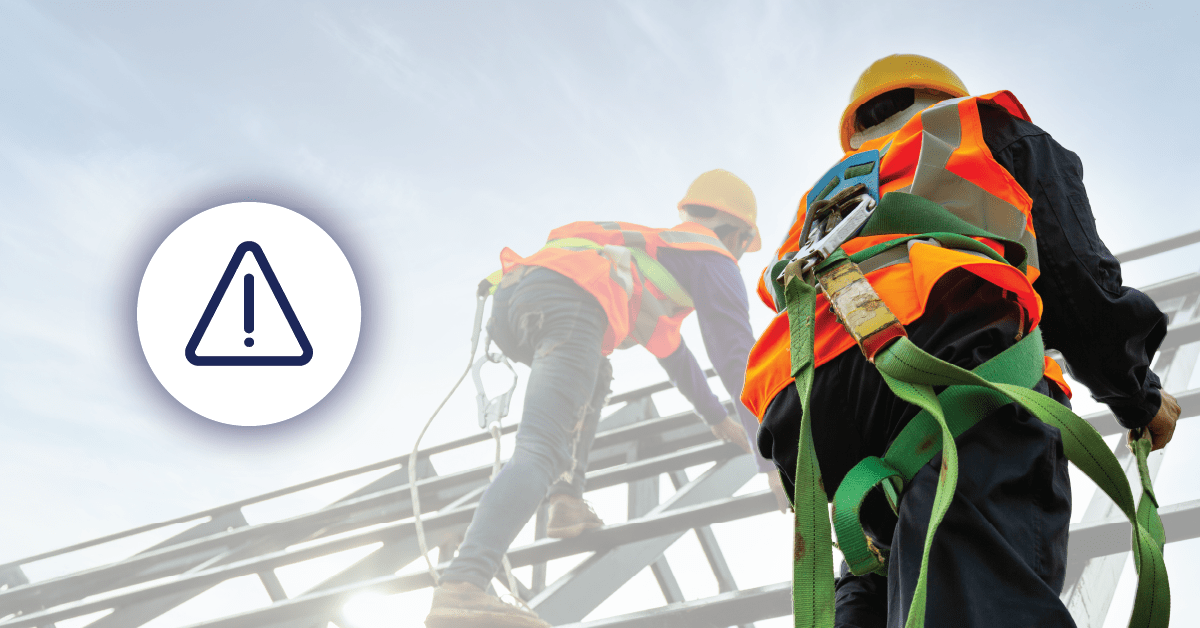
In 2024, Safe Work Australia reported that 570 workers fatality inured at an Australian workplace due to falls from height. This was the third highest cause of workplace fatalities and continues to represent a significant number of incidents across several sectors.
The dangers of working at heights are further underscored by key findings from Safe Work Australia:
- Falls account for over 10% of serious workers’ compensation claims annually
- Falls from height saw a 71% increase in fatalities from 2022 to 2024
- Construction, transport, and maintenance sectors are the highest-risk industries
- Many incidents involve temporary or untrained workers
This national picture highlights the importance of working safely at height and that compliance isn’t a tick-box exercise – it is a moral and legal obligation. Failing to manage fall risks can lead to:
- Prosecution under OHS/WHS legislation
- Fines and penalties for organisations and officers
- Loss of reputation and trust, leading to a loss in business and ultimately revenue
Non-compliance does not have to result in an incident for regulators to issue fines. For example, SafeWork NSW stipulates that “Solar installers face on-the-spot fines of up to $720 for individuals and $3,600 for businesses for not protecting workers from falls from heights and electrical risks.”
Prevention rather than Reaction
The advice from Safe Work Australia, and other regulatory bodies such as WorkSafe Victoria is to take a risk-focused approach to mitigate the risks associated with working from heights. Rather than simply asking, “Are you working at heights?” organisations should be assessing the likelihood of a fall occurring, the potential severity of a fall, and the effectiveness of control measures.
The objective of this approach is not just about being compliant, but creating meaningful, proactive safety measures to protect workers and mitigate fall risks.
Obligations for Managing Fall Risks Effectively
There are numerous ways to boost safety and meet compliance duties when work has the potential for fall risks. Under OHS/WHS legislation, a PCBU (Person Conducting a Business or Undertaking) or employer must identify hazards, assess risks, and implement controls to eliminate or minimise risks so far as is reasonably practicable.
1. Apply the Hierarchy of Controls
When managing fall hazards, always start with the most effective control and work down the hierarchy:
| Level 1 – Eliminate the hazard | Wherever possible, complete tasks at ground level or on a stable, solid structure. |
| Level 2 – Passive fall prevention | Use equipment such as scaffolding, guardrails, perimeter screens, safety mesh, or EWPs to prevent falls. |
| Level 3 – Work positioning systems | Implement systems like travel-restraint setups to keep workers within a designated safe zone. |
| Level 4 – Fall arrest systems | Utilise harnesses, safety nets, or catch platforms to minimise injury if a fall occurs. |
| Level 5 – Ladders and administrative controls | When other options aren’t feasible, use fixed or portable ladders and other administrative controls. |
2. Document your risk assessment
Applying controls is not enough, you should also record how risks were assessed and managed. A documented risk assessment:
- Shows you’ve taken reasonable steps to protect workers.
- Demonstrates compliance with OHS/WHS obligations.
- Provides evidence that the hierarchy of controls was applied.
- Is critical if an incident occurs.
3. Training and Supervision
An employer or PCBU cannot simply assume competence. All personnel, including contractors, should be:
- Properly inducted, trained and competent
- Supervised by experienced workers
- Equipped with clear instructions and emergency procedures
4. Monitor and Review
Fall risk controls should be reviewed regularly through:
- Toolbox talks and site audits
- Consultation and real-time feedback from workers
- Incident investigations
How Cm3 helps mitigate Fall Risks when engaging contractors
Cm3’s assessment process and contractor management platform are designed to support businesses in identifying and managing risks that are inherent when engaging and using contractors as part of their workforce. This fosters safer supply chains and efficient contractor
When engaging a contractor through Cm3 that conducts work with the potential for Fall Risks, the contractor must complete a prequalification assessment to determine the nature of the work and their preparedness to manage the risks.
The evaluation conducted by qualified Assessors includes:
- Risk Assessments
- Safe Work Method Statements (SWMS) when work is classed as High-Risk Construction Work
- Training and competency records
- Licences (where required) such as High-Risk Work Licences
- Equipment inspection records (ladders, scaffolding, harnesses etc)
- Emergency and rescue procedures
Additionally, assessments for managing construction work, electrical work, use of subcontractors, and powered mobile plant are applied where applicable, providing a comprehensive understanding of a contractor’s capabilities for the work at hand.
While not an OHS/WHS legislative requirement, a Permit To Work for Fall Risks is considered best practice. Cm3 is currently developing a fully digital PTW system that will integrate seamlessly with Cm3 OnSite, providing a streamlined process for raising, reviewing, authorising, and closing out work permits for work with Fall Risks.
If you are a business engaging contractors or managing projects across multiple worksites, Cm3 gives you the tools and confidence to reduce fall risks and go beyond meeting your WHS obligations.